

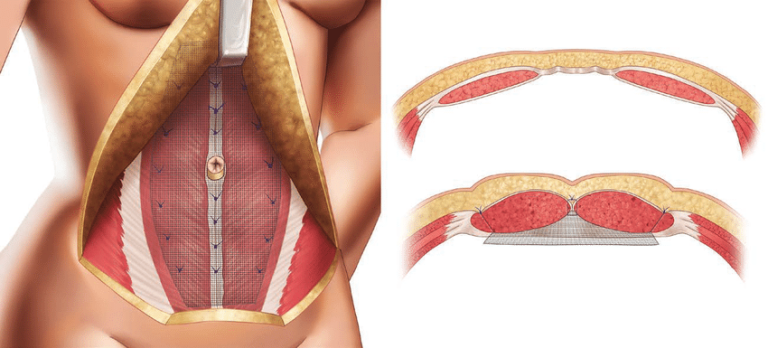
Abdominal wall reconstruction is a carefully planned procedure designed to restore strength and function to the core after weight loss and hernia formation. It is commonly performed once a patient has achieved significant and stable weight reduction.
The operation involves repairing the hernia defect and bringing the rectus muscles of the abdominal wall back together in the midline. This technique, known as muscle transposition, corrects the underlying muscle separation that contributes to hernia formation. Mesh is usually used to reinforce the repair and provide long-term durability.
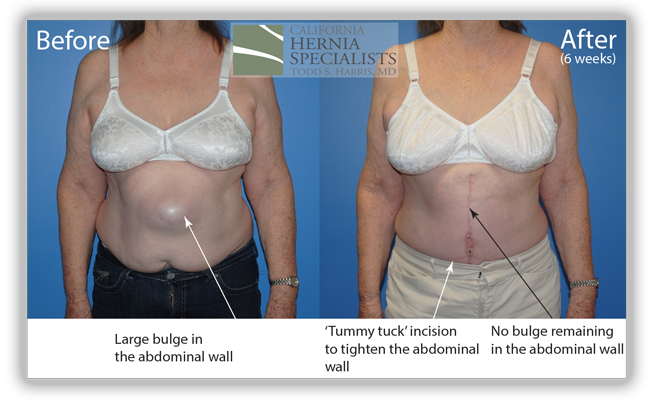
In most cases, the procedure is combined with removal of excess abdominal skin and fat (an abdominoplasty). This excess tissue can cause rashes, discomfort, difficulty with clothing, and ongoing strain on the abdominal wall. Removing it allows better closure, improved posture, and more effective engagement of the core muscles.
The surgery is performed as an open procedure through a low incision from hip to hip, with relocation of the umbilicus. Large tissue flaps are carefully raised to access and repair the deeper muscle layers. Hospital stay is typically two nights. A vacuum dressing is applied for about one week, and most patients require around six weeks off work, depending on their occupation.
The next step is to discuss concerns with your GP and seek referral for specialist assessment to plan the safest pathway forward.