

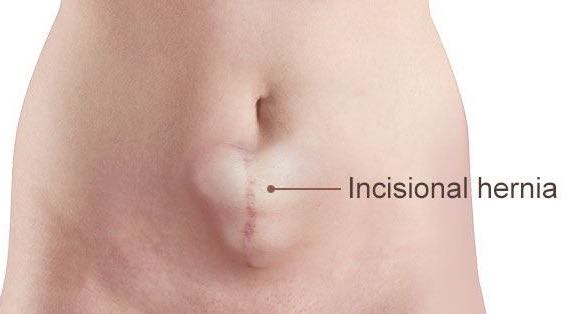
Ventral and incisional hernias are common conditions, particularly in people who have experienced significant weight gain or obesity. These hernias occur when the muscles of the abdominal wall weaken and separate, allowing abdominal contents to bulge forward. Over time, increased abdominal pressure and reduced muscle tone stretch the abdominal wall, making it difficult for the body to maintain its natural “core” support.
In patients with a body mass index (BMI) over 35, hernias are not simply a hole in the muscle — they are part of a broader failure of the abdominal wall. Excess weight places constant strain on the muscles, causes widening of the rectus muscles (the “six-pack” muscles), and significantly increases the risk of hernia recurrence if repair is attempted too early. In fact, repairing hernias in this setting carries a recurrence rate of over 30%.
For this reason, best-practice, evidence-based care focuses first on weight reduction. Weight loss may be achieved through lifestyle changes, injectable weight-loss medications, or metabolic (weight-loss) surgery. Once weight has stabilised and abdominal pressure is reduced, hernia repair becomes safer, more durable, and far more successful.
In these circumstances, surgery is better described as abdominal wall reconstruction. The goal is not just to close a defect, but to restore strength, function, and long-term stability to the abdominal core.